
The Spirit as Character · Article 9 of 11
Odds Are Your First Was a Blue Weber. Meet the Other Four.
Mexico has five agave and sotol spirits with a denomination of origin. Think of them as five singles with their papers in order. Ninety-seven of every hundred litres come from the same one. Here are all five, and who they’d match with.
Everyone has two names
There’s the one on your paperwork, and the one your friends actually use.
Plants too. The official one is in Latin, given by a botanist, usually in Europe, usually from a dried specimen somebody else carried back. It tells you where they’re from or what they look like.
The other one comes from the people who’ve lived next to them for generations. That one tells you who they are.
Odds are your first was a Blue Weber
Of every hundred litres of agave and sotol spirit made under Mexico’s five denominations, ninety-seven are tequila. Mezcal is about two. Bacanora, sotol and raicilla together fit in a third of the last litre.
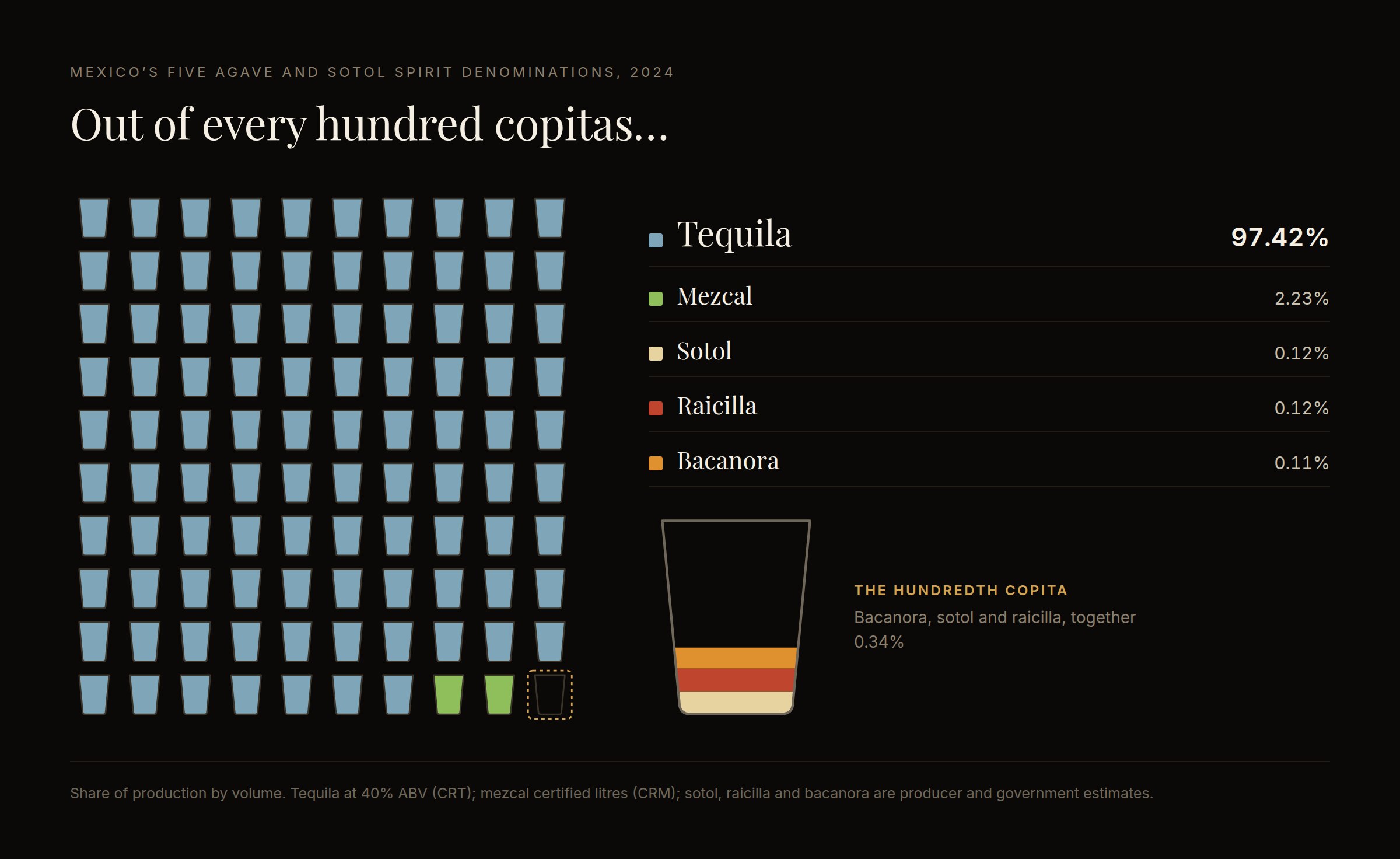
So statistically, you’ve already met one of these five, and you may never have met the other four. Here they are, in the order they got their papers.
 1974
1974 2019
2019
Papers since 1974 · Tequila
Blue Weber, 7
The Famous One
- Official name
- Agave tequilana, “of Tequila.” Named after their hometown in 1902 by a French army doctor.
- What their friends call them
- Azul.
- Lives in
- Jalisco and a few neighbouring states.
- Share of the market
- 97 in every 100
The most famous face in Mexico, and the most identical. They’re grown from their mother’s offshoots, so every one is a clone of the one before: the daughter is the mother is the grandmother. Polished, reliable, and recognised in any bar on earth.
Green flag Exactly the same every time.
Red flag So is their sibling. And their mother.
Swipe right if you like knowing exactly what you’re getting.
At their best September, the Mes Patrio.
 Would match with Jabalí, the wild one. Find them in August.
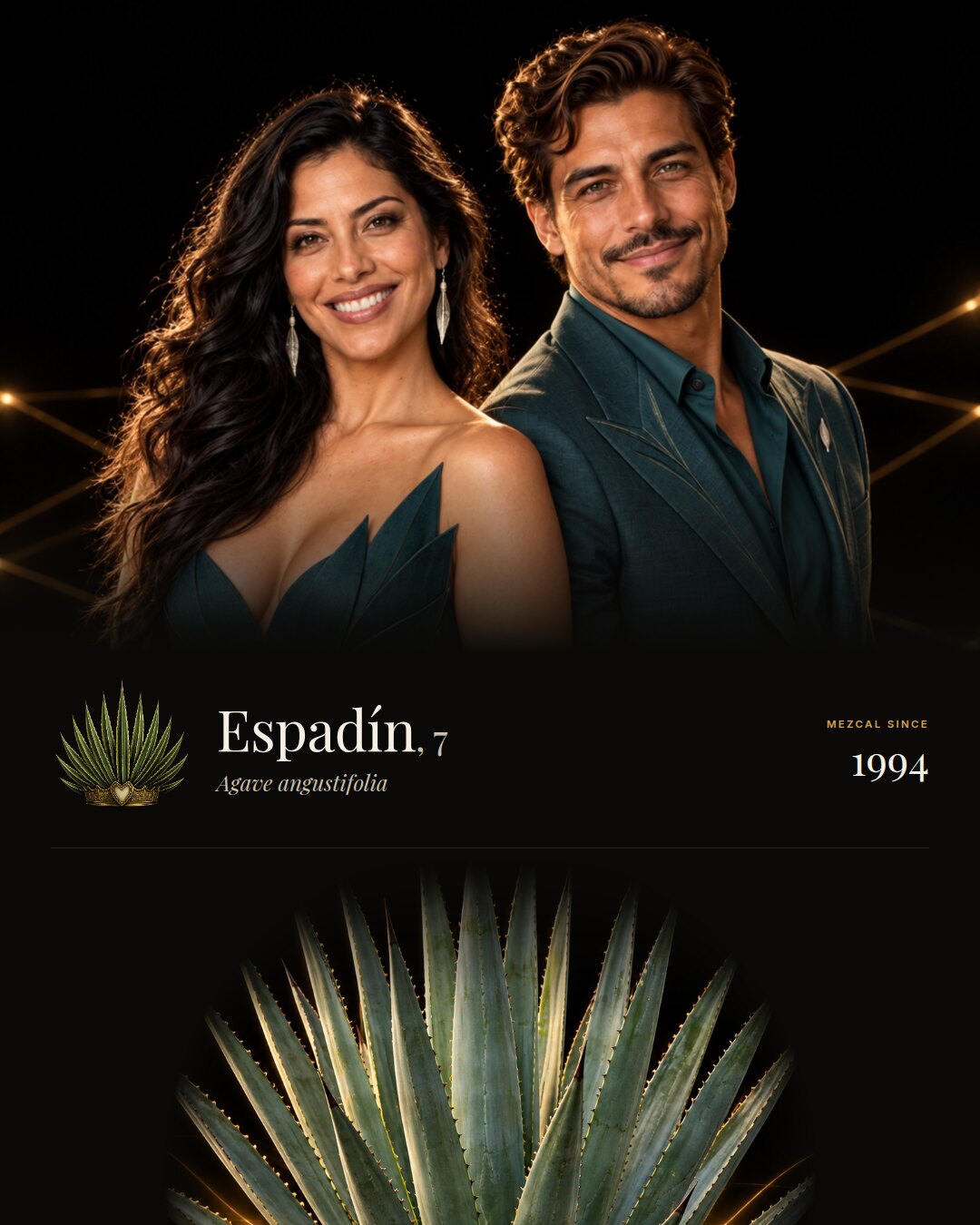
Papers since 1994 · Mezcal
Espadín, 7
The Host
- Official name
- Agave angustifolia, “narrow leaf.”
- What their friends call them
- Espadín, “little sword.” The botanist and the village saw the same blade.
- Lives in
- Oaxaca, mostly.
- Share of the market
- Mezcal is 2 in every 100, and espadín makes most of it
The host of every party. They make 85 to 90 percent of all mezcal and still make you feel like the guest of honour. They grow up fast, get along with every maestro, and are the reason the rare ones get invited at all.
Green flag Makes everyone feel invited.
Red flag You’ll never be the only one.
Swipe right if you always end up with the person who knows everyone at the party.
At their best July, the Guelaguetza, which means an offering: giving without expecting anything back.
 Would match with Tepeztate, the hermit on the cliff. Find them in January.

Papers since 2000 · Bacanora
Bacanora · age undisclosed
The Outlaw
- Official name
- Agave angustifolia. Yes, the same species as espadín, in its Sonoran form, which locals call pacifica or yaquiana. Broader leaves, bluer, raised in the desert. How different the two really are is still argued over.
- What their friends call them
- Bacanora, after where they grew up. In the Ópata language: baca, reed, and nora, slope.
- Lives in
- The Sonoran sierra.
- Share of the market
- About 1 in every 1,000
Espadín’s twin, separated at birth. Same official name, completely different life. Sonora banned them in 1915. In 1919 the state brought back beer, wine, cider and champagne, and pointedly left them out. They spent 77 years in hidden vinatas and never quite left town.
Green flag Loyal. Stayed through 77 years underground.
Red flag Has a past. A 77-year one.
Swipe right if you like someone with stories they don’t tell on the first date.
At their best November, the month the dead come back. So did they.
 Would match with Sotol, the neighbour from the same desert. Find them in February.
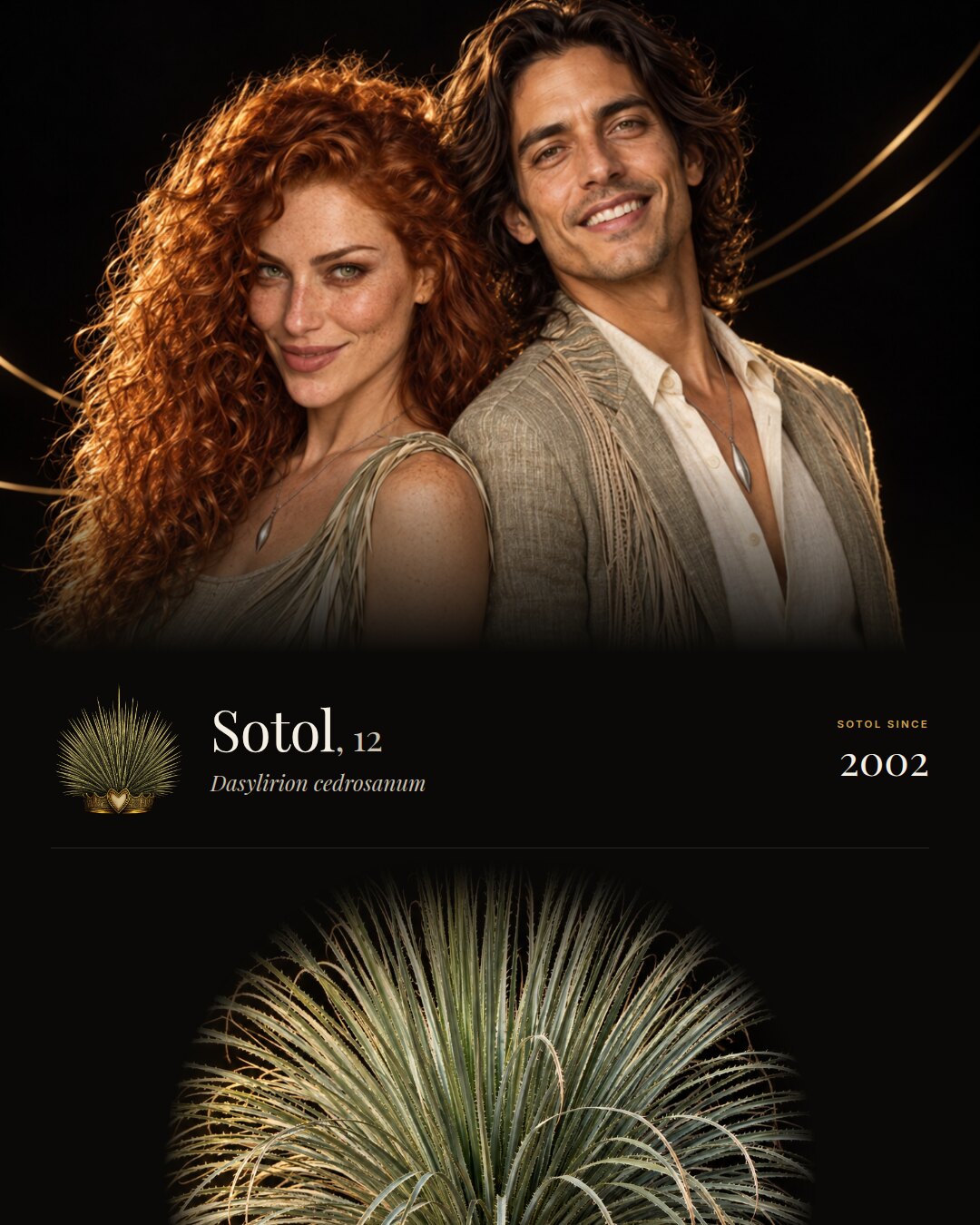
Papers since 2002 · Sotol
Sotol, 12
The Tough One
- Official name
- Dasylirion, “the thick, shaggy lily.” The one in our app is Dasylirion cedrosanum.
- What their friends call them
- Sotol. Nobody uses the Latin.
- Lives in
- Chihuahua, Coahuila, Durango.
- Share of the market
- About 1 in every 1,000
Not an agave, and completely relaxed about it. There are male plants and female plants. They first bloom around twelve. And unlike every agave you’ll ever meet, they don’t die for love: they bloom, live, and bloom again.
Green flag Doesn’t die for love.
Red flag Will remind you they’re not an agave.
Swipe right if you believe in second chances.
At their best February, the Día del Amor y la Amistad. Love, and friendship: the only one here who isn’t family and gets invited anyway.
 Would match with Bacanora. Find them in November.
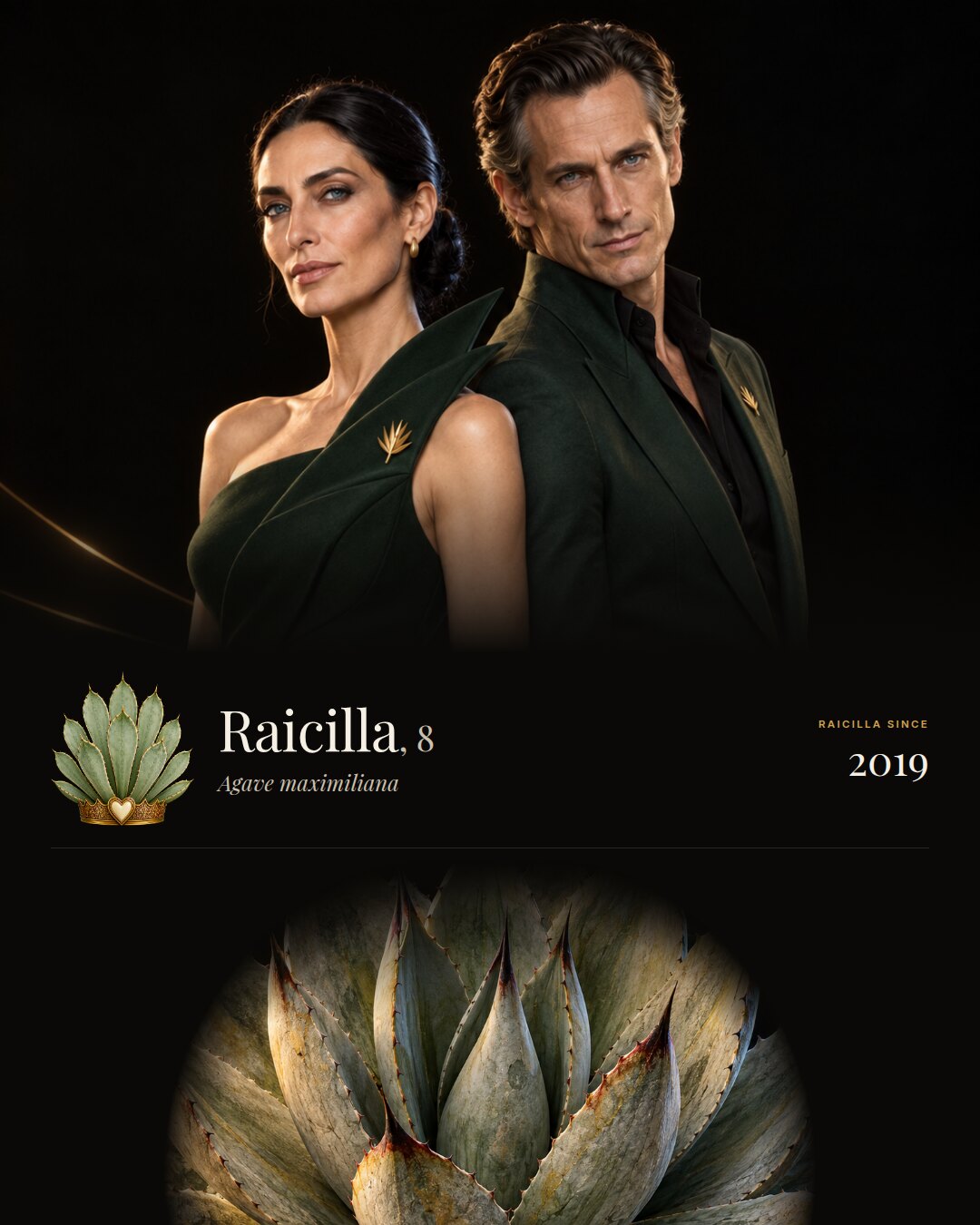
Papers since 2019 · Raicilla
Raicilla, 8
The Royal One
- Official name
- Agave maximiliana, after Maximilian of Habsburg, Emperor of Mexico.
- What their friends call them
- Lechuguilla, “little lettuce.”
- Lives in
- The Jalisco sierra.
- Share of the market
- About 1 in every 1,000
Named after an emperor, called “little lettuce” by the people who actually know them. Maximilian accepted the crown of Mexico on 10 April 1864 and was executed three years later. The plant has kept his name for a century and a half. It grows only from seed, high in the sierra, and gives raicilla its mountain character.
Green flag Still standing 150 years after the emperor wasn’t.
Red flag Will bring up the emperor.
Swipe right if you like old money with a sense of humour.
At their best April, the month an emperor said yes.
 Would match with Salmiana, the plant named for a prince. Find them in December.
Set them up
The maestros have been matchmakers for centuries.
In mezcal there’s a word for it: ensamble. Different agaves are roasted, crushed, fermented and distilled together, as one batch. For most of mezcal’s history that was simply how it was done. The single-agave bottle only became fashionable in the late twentieth century. As one maestro put it: “We brought one donkey-load of each type of agave to the palenque, and that’s how we decided.”
They also say no. Some agaves don’t get along, and the maestro leaves them apart. Taste decides. One of the classic couples is tepeztate and espadín: the hermit who spent thirty years on a cliff, and the host who talks them down.
 +
+
The classic coupleThe hermit and the host
 ?
?
Your blind dateNeighbours who’ve never shared a bottle
The five denominations keep these five in separate bottles. Your glass doesn’t have to.
Set up a blind date. Pour two. Meet each one alone first, always. Then add a few drops of one to the other. Bacanora and sotol are a good place to start: neighbours from the same desert, who’ve never shared a bottle.
Some matches are a disaster. Some you’ll talk about for a year. Either way, write it down.
Seven more singles
Five made the article. Twelve made the calendar, one for every month.
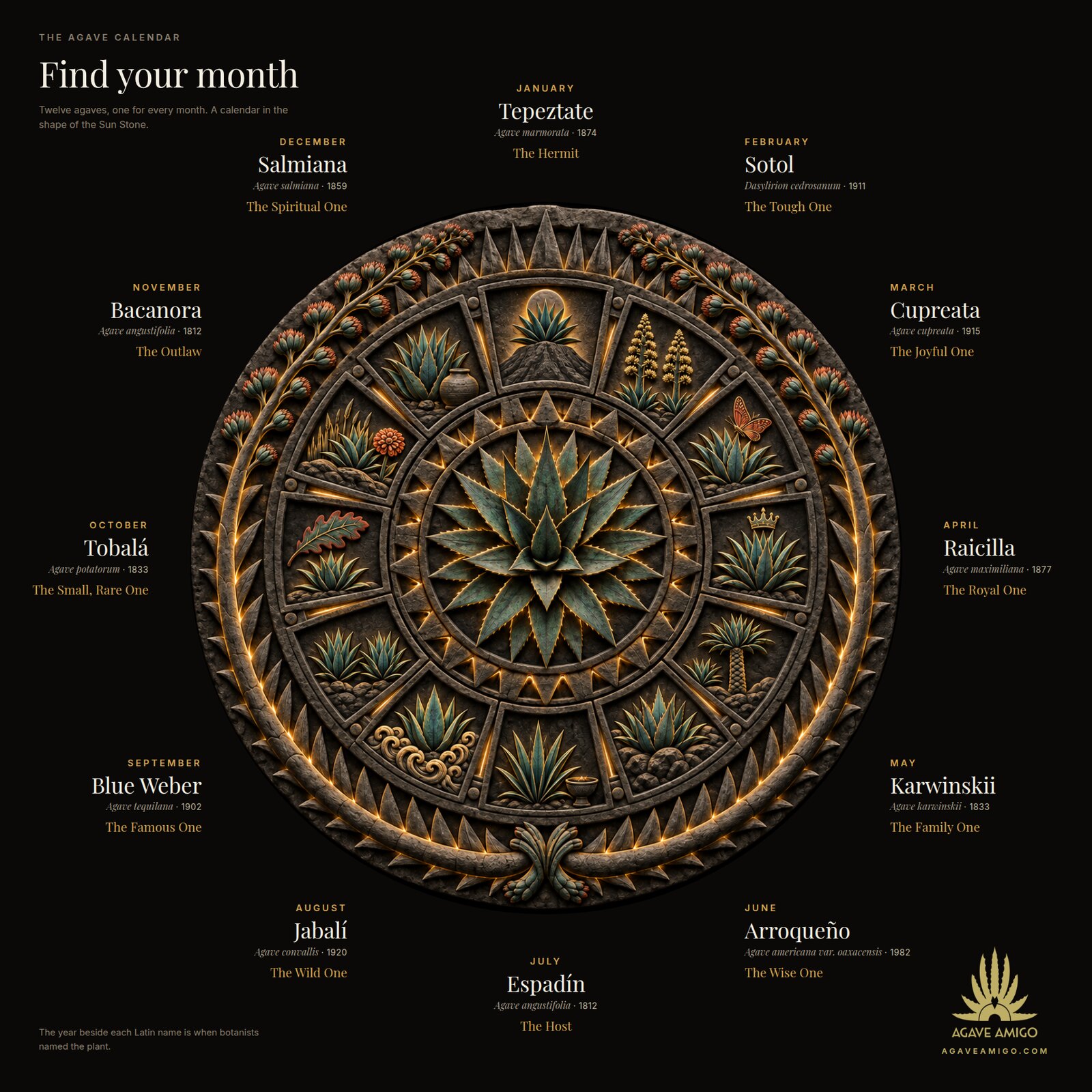
- JanuaryTepeztate
 MarchCupreata
 MayKarwinskii
 JuneArroqueño
- AugustJabalí
 OctoberTobalá
- DecemberSalmiana
Tepeztate lives on a cliff and won’t come down. Tobalá was literally named after the drinkers. Jabalí takes four days and five nights to open up. Karwinskii comes with ten relatives, all with nicknames.
Find your month. Meet your plant.
Then send this to the friend who is so obviously a Jabalí.
References
- Consejo Regulador del Tequila (CRT), production statistics, 2024. Tequila volume at 40% ABV.
- Consejo Regulador del Mezcal (CRM), annual statistical report, 2024. Certified litres.
- Diario Oficial de la Federación, declaration of the Raicilla appellation of origin, 28 June 2019.
- Estudios Sociales (2020), on the history of bacanora: the 1915 ban, the 1919 exception, the 1992 repeal and the 6 November 2000 appellation. SciELO México.
- Mezcalistas: on the Sonoran forms of Agave angustifolia, and on ensamble.
- Mezcal Reviews: the maestro’s donkey-load quote.
- International Plant Names Index and Kew, Plants of the World Online: botanical names, authors and years.
- Difford’s Guide, “Varieties of agave”: espadín’s share of mezcal.
Choose your Moment and discover Your Pour.
Find Your Pour →A note on language. Proper nouns keep their names in every language: spirits, agave varietals, brands, and the people who make them.